APPLIED LINGUISTICS
.jpg)
-
Comprehend the components of the English language.
-
Use knowledge of interrelated aspects to help students learn to speak, read and write in English.
-
Demonstrate knowledge of rhetorical structures and discourse applied to learning English.


-
Lesson plan: Speaking Activity
-
-
Level: Intermediate
-
Aim: Students discuss the topic of longer recess time outdoors vs present schools’
-
recess policies from two different points of view: TEACHERS and STUDENTS
-
Time: 10 minutes
-
-
After they watched the video and developed the LISTENING activity above:
-
Purpose: To develop the use of persuasive and descriptive language, to give every student the opportunity to express their opinion on the issues under discussion, to actively listen to new ideas, to justify choices made.
-
-
PREPARATION:
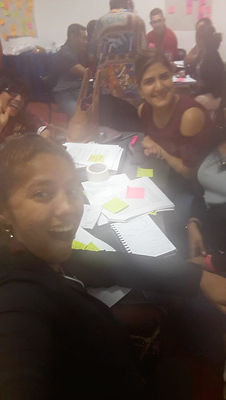
Each student receives two sticky notes of different colors. -
They will be given two minutes to write KEY WORDS (not full sentences).
Each color would represent the ideas in favor or against more recess time
outdoors in schools, from different roles: -
YELLOW = Students
-
GREEN = Teachers
-
STAGE 1: -
They will be given 2 minutes to individually write the KEY WORDS that summarize the arguments in favor or against more recess time outdoors in schools. (CONCEPTUALIZATION)
-
-
STAGE 2: Walking debate
-
TEACHERS and STUDENTS signs will be placed on either side of the room.
-
All students will gather in the center of the room.
-
At the count of three students will move to any of the sides and assume that role.
-
-
Using the KEY WORDS on their sticky notes they will discuss the arguments trying to find all the common possible arguments.
-
(4 minutes)
-
-
(FORMULATION and ARTICULATION)
This also reduces tensions and anxiety as they talk to each other in groups
like they are preparing to expose their ideas facing the opposite group. Here
personality traits and gender differences will be considered since they will
choose which side to go to initially and their ideas might influenced by these) -
-
STAGE 3:
Facing each other they will say to their opposite group the arguments
they would use if they were teachers/students. -
Students will be encouraged to take turns and all will participate.
-
(4 minutes)
-
-
The teacher helps to improve pronunciation
-
At a later stage of the class, the students will move to the other side of the classroom and switch roles.
-
Fernando Saltos -
Miguel Astudillo
-
Sindy Astudillo
-
Diana Estrada
-
Ma. Teresa Alban
-
Silvania Herrera